
The pharmaceutical industry is evolving rapidly in 2026, and AI in drug delivery systems is leading the charge. Artificial intelligence and machine learning are no longer optional — they are essential tools that help BPharm students and professionals create smarter, faster, and more effective formulations.
Gone are the days of pure trial-and-error experiments. Today, AI predicts outcomes, optimizes formulations, and accelerates development of novel drug delivery systems (NDDS) like nanoparticles, liposomes, and microneedles.
Here’s everything you need to know — broken down clearly with lists for easy reading.
Key Benefits of Using AI in Drug Delivery Systems
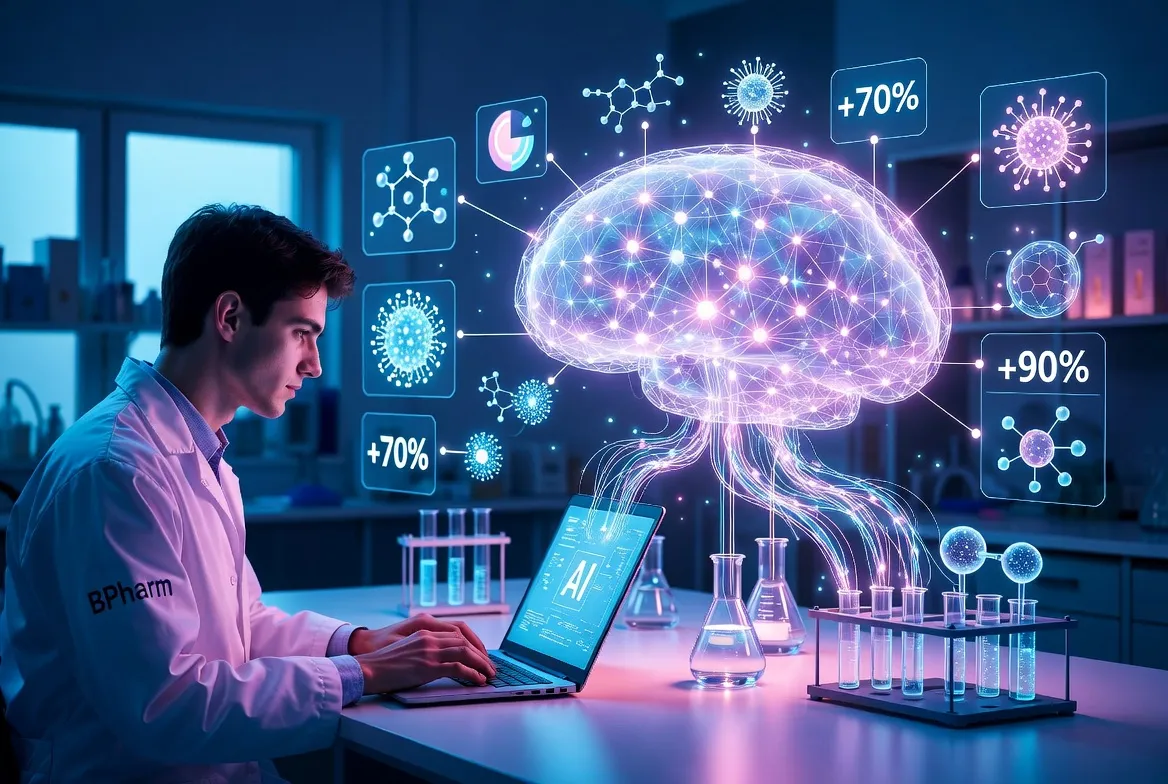
- Reduces formulation development time by up to 70%
- Improves drug solubility and bioavailability for poorly water-soluble drugs
- Enhances targeting accuracy (especially in cancer and chronic diseases)
- Cuts costs significantly by minimizing physical lab trials
- Predicts stability and shelf-life with high accuracy
- Enables personalized and controlled-release formulations
- Supports real-time optimization using self-driving labs
Top 3 Applications Every BPharm Student Should Know
-
Nanoparticles
- AI designs lipid nanoparticles (LNPs) for better tumor targeting
- Predicts particle size, encapsulation efficiency, and release kinetics
- Boosts oncology drug delivery with up to 89% higher tumor accumulatio
-
Liposomes
- Machine learning optimizes lipid composition for stability
- Creates pH-responsive or temperature-sensitive liposomes
- Ideal for RNA therapies, biologics, and vaccine delivery
-
Microneedles
- AI helps design painless transdermal patches
- Controls precise drug loading and release profiles
- Perfect for diabetes, skin disorders, and long-acting therapies
Why BPharm Students Must Master AI in Drug Delivery Systems
- Directly matches PCI’s updated 2026 syllabus focusing on industry-relevant skills
- Makes final-year projects faster, more innovative, and publishable
- Gives a huge advantage in placements at pharma companies, CROs, and startups
- Opens doors to high-demand roles in R&D, formulation development, and quality control
- Combines your core subjects (Pharmaceutics, Biotechnology, and Analytical Techniques) with future-ready tech
- Easy to implement using free tools like Python (scikit-learn), TensorFlow, or simple simulation software
Common Challenges & How to Overcome Them
- Limited access to large datasets → Use open-source pharma databases and public AI models
- Model interpretability issues → Apply explainable AI techniques taught in recent BPharm electives
- Regulatory concerns → Follow 2026 FDA and CDSCO guidelines on AI in pharma
- Skill gap → Start with small projects and online certifications (Coursera, NPTEL)
Future Trends in AI Drug Delivery for 2026–2027
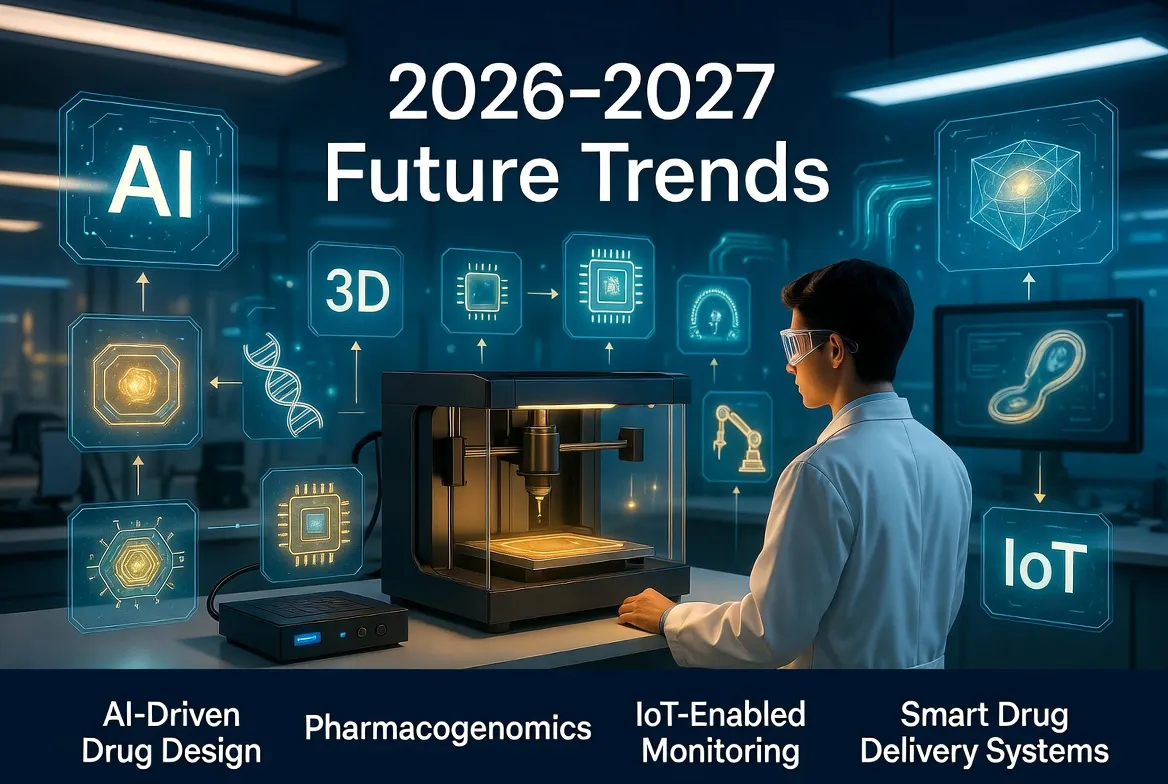
- Integration with 3D/4D printing for on-demand personalized patches
- IoT-enabled smart delivery systems that adjust dosage in real time
- Combination with pharmacogenomics for truly patient-specific therapy
- Generative AI creating completely new excipients and polymers
- AI-powered virtual clinical trials for faster approvals
Mastering AI in drug delivery systems today will make you stand out in placements and research. Whether you are working on a nanoparticle project or planning higher studies, this topic gives you both practical skills and a futuristic edge.