
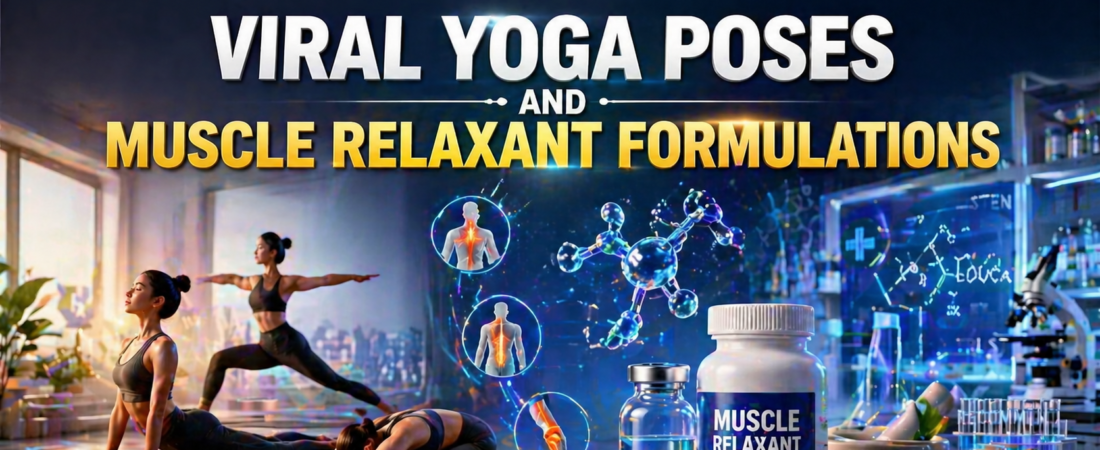
Introduction to Viral Yoga Poses and Muscle Relaxant Formulations
Viral yoga poses and muscle relaxant formulations are widely used for managing muscle tension, stress, and musculoskeletal disorders. While yoga provides a non-pharmacological and natural approach to muscle relaxation, muscle relaxant drugs are clinically used to reduce muscle spasms and neurological stiffness. Combining both approaches offers an effective strategy for improving physical and mental well-being.
Scientific studies show that relaxation techniques such as yoga and progressive muscle relaxation significantly reduce stress, anxiety, and muscle tension, making them valuable therapeutic tools.
What Are Muscle Relaxants?
Muscle relaxants are drugs that reduce skeletal muscle tone and are used to treat muscle spasms, pain, and spasticity.
Key Functions
- Reduce involuntary muscle contraction
- Relieve musculoskeletal pain
- Improve mobility in neurological conditions
- Support rehabilitation therapy
Classification of Muscle Relaxant Formulations
Muscle relaxants are broadly classified into the following categories:
1. Neuromuscular Blocking Agents
- Act at the neuromuscular junction
- Inhibit transmission between nerve and muscle
- Used mainly in surgery and ICU settings
2. Centrally Acting Muscle Relaxants (Spasmolytics)
- Act on the brain and spinal cord
- Reduce muscle spasms and stiffness
- Commonly used in physiotherapy and pain management
3. Direct Acting Muscle Relaxants
- Act directly on muscle fibers
- Reduce contraction without CNS involvement
These drugs are widely used for conditions such as stroke, cerebral palsy, muscle spasm, and fibromyalgia.
Pharmaceutical Formulations of Muscle Relaxants
Muscle relaxants are available in multiple dosage forms:
- Tablets and capsules
- Injectable formulations
- Topical preparations
- Intrathecal delivery systems
Each formulation differs in onset of action, bioavailability, and clinical application.
Viral Yoga Poses for Muscle Relaxation
Yoga is a scientifically supported technique that promotes muscular relaxation, improves circulation, and reduces stress.
Benefits of Yoga in Muscle Relaxation
- Reduces stress and anxiety levels
- Improves flexibility and posture
- Enhances neuromuscular coordination
- Promotes parasympathetic nervous activity
Research confirms that yoga and relaxation exercises effectively decrease stress and improve overall mental health.
Top Viral Yoga Poses for Muscle Relaxation
1. Child’s Pose (Balasana)
- Relaxes lower back and shoulders
- Reduces spinal tension
2. Cat-Cow Pose
- Improves spinal flexibility
- Relieves neck and back stiffness
3. Legs-Up-the-Wall Pose (Viparita Karani)
- Enhances blood circulation
- Reduces leg fatigue
4. Seated Forward Bend (Paschimottanasana)
- Stretches hamstrings and spine
- Promotes deep relaxation
5. Corpse Pose (Savasana)
- Provides full body relaxation
- Reduces stress and mental fatigue
Mechanism of Yoga in Muscle Relaxation
Yoga works through multiple physiological mechanisms:
- Reduces cortisol (stress hormone) levels
- Enhances oxygen supply to muscles
- Activates parasympathetic nervous system
- Improves neuromuscular coordination
Progressive muscle relaxation techniques used in yoga help differentiate tension and relaxation states, improving muscular control.
Comparison: Yoga vs Muscle Relaxant Formulations
| Parameter | Yoga Therapy | Muscle Relaxant Drugs |
|---|---|---|
| Type | Non-pharmacological | Pharmacological |
| Side Effects | Minimal | Possible (sedation, dizziness) |
| Cost | Low | Moderate |
| Onset of Action | Gradual | Rapid |
| Long-term Benefit | High | Limited without therapy |
Clinical Integration of Yoga and Muscle Relaxants
A combined approach is often recommended:
- Use yoga as first-line therapy for mild tension
- Use drugs for acute or severe muscle spasms
- Combine both for long-term rehabilitation
Studies show that combining relaxation techniques with medical treatment enhances therapeutic outcomes.
Limitations and Precautions
Yoga
- Requires consistency and proper technique
- May not be sufficient for severe conditions
Muscle Relaxants
- Risk of drowsiness and dependency
- Should be used under medical supervision
Conclusion
Viral yoga poses and muscle relaxant formulations together provide a comprehensive strategy for managing muscle tension and stress-related disorders. Yoga offers a safe and natural method for long-term relaxation, while pharmaceutical muscle relaxants provide immediate relief in clinical conditions. A balanced integration of both approaches ensures optimal therapeutic outcomes for patients and practitioners.