
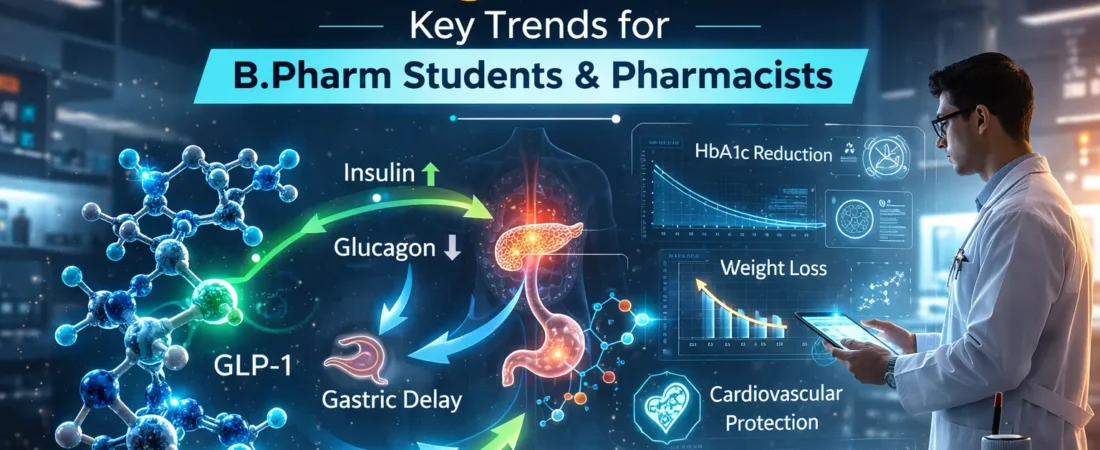
The therapeutic landscape of metabolic disorders has undergone significant transformation over the past decade, and GLP-1 receptor agonists have emerged as one of the most impactful drug classes. Initially developed for the management of type 2 diabetes mellitus, these agents have expanded into obesity treatment, cardiovascular risk reduction, and broader metabolic care.
As of 2026, GLP-1 agonists are not limited to glycemic control; they are central to a global shift in metabolic disease management. For B.Pharm students and practicing pharmacists, understanding this drug class is academically important and professionally strategic.
1. Understanding GLP-1 Receptor Agonists
Glucagon-Like Peptide-1 (GLP-1) receptor agonists are incretin mimetics that enhance glucose-dependent insulin secretion. They replicate the physiological actions of endogenous GLP-1 while offering longer duration of activity.
Mechanism of Action
-
Stimulate insulin secretion in a glucose-dependent manner
-
Suppress glucagon release
-
Delay gastric emptying
-
Increase satiety
-
Promote clinically significant weight loss
These combined mechanisms explain their dual utility in diabetes and obesity management.
2. Leading GLP-1 Agents in 2026
Semaglutide
Semaglutide is available in both injectable and oral formulations. It demonstrates strong HbA1c reduction and substantial weight loss, making it a first-line option in many obesity treatment protocols.
Tirzepatide
Although technically a dual GIP and GLP-1 receptor agonist, tirzepatide is often discussed alongside GLP-1 therapies. It offers superior glycemic control and enhanced weight reduction compared to traditional GLP-1 agonists.
Liraglutide
Liraglutide remains clinically relevant due to its established cardiovascular safety data and daily dosing profile.
3. Key Trends in 2026
3.1 Expansion into Obesity Pharmacotherapy
One of the most significant trends is the shift from diabetes-centric prescribing to obesity-focused treatment. GLP-1 agonists are now widely used in:
-
Non-diabetic obesity
-
Pre-diabetes
-
Metabolic syndrome
-
Polycystic ovarian syndrome (PCOS) with obesity
The obesity pharmacotherapy market continues to expand rapidly, creating substantial opportunities for pharmaceutical companies and healthcare professionals.
3.2 Cardiovascular and Renal Outcome Benefits
Recent large-scale outcome trials have demonstrated:
-
Reduction in major adverse cardiovascular events (MACE)
-
Improved renal parameters
-
Reduction in inflammatory markers
This has positioned GLP-1 agonists as cardiometabolic protective agents rather than solely antidiabetic drugs.
3.3 Development of Oral and Long-Acting Formulations
Advancements in formulation science have led to:
-
Improved oral bioavailability
-
Once-weekly injectable preparations
-
Combination metabolic therapies
This highlights the role of pharmaceutical technology and drug delivery innovation in modern therapy.
3.4 Research in Neuroprotection and Beyond
Ongoing investigations are exploring the potential role of GLP-1 agents in:
-
Alzheimer’s disease
-
Parkinson’s disease
-
Cognitive impairment
If validated, these findings may further expand their therapeutic scope beyond metabolic disorders.
4. Safety Considerations and Pharmacovigilance
With increased global use, safety monitoring has become critical.
Common Adverse Effects
-
Nausea
-
Vomiting
-
Diarrhea
-
Gastrointestinal discomfort
Important Safety Signals
-
Risk of pancreatitis
-
Gallbladder-related disorders
-
Thyroid C-cell tumor findings in animal studies
For pharmacists and pharmacovigilance professionals, these drugs represent an important area for adverse drug reaction monitoring, signal detection, and risk management planning.
5. Career Opportunities for B.Pharm Students
The expansion of GLP-1 therapy has created opportunities across multiple pharmaceutical sectors.
Regulatory Affairs
-
Post-marketing surveillance
-
Label updates
-
Risk management documentation
Pharmacovigilance
-
ADR case processing
-
Signal detection
-
Periodic safety update reports (PSURs)
Clinical Research
-
Phase IV and real-world evidence studies
-
Comparative effectiveness research
-
Obesity and cardiometabolic trials
Pharmaceutical Marketing and Medical Affairs
-
Scientific detailing
-
Therapeutic positioning
-
Market expansion strategies
Students with strong conceptual understanding of GLP-1 pharmacology gain a competitive advantage in interviews and industry roles.
6. Academic Relevance for B.Pharm Examinations
GLP-1 receptor agonists are frequently covered in:
-
Pharmacology theory examinations
-
Viva voce
-
GPAT and NIPER entrance exams
-
Competitive pharmacy recruitment tests
Important exam topics include:
-
Mechanism of action
-
Classification of incretin-based therapies
-
Comparison with insulin and DPP-4 inhibitors
-
Adverse effects and contraindications
-
Clinical indications beyond diabetes
7. Future Outlook: 2026–2030
The next phase of innovation may include:
-
Triple incretin receptor agonists
-
Personalized metabolic pharmacotherapy
-
Smart injectable devices
-
Expanded cardiometabolic indication approvals
GLP-1 therapies are evolving into foundational metabolic treatments rather than single-indication drugs.
Conclusion
GLP-1 agonists represent one of the most influential pharmacological advancements in recent years. Their transition from glucose-lowering agents to comprehensive metabolic therapeutics has redefined diabetes and obesity management.
For B.Pharm students and pharmacists, mastery of GLP-1 pharmacology is not merely academic preparation; it is preparation for the future of pharmaceutical practice. A clear understanding of mechanism, clinical applications, safety monitoring, and market trends ensures readiness for both examinations and professional roles in the pharmaceutical industry.